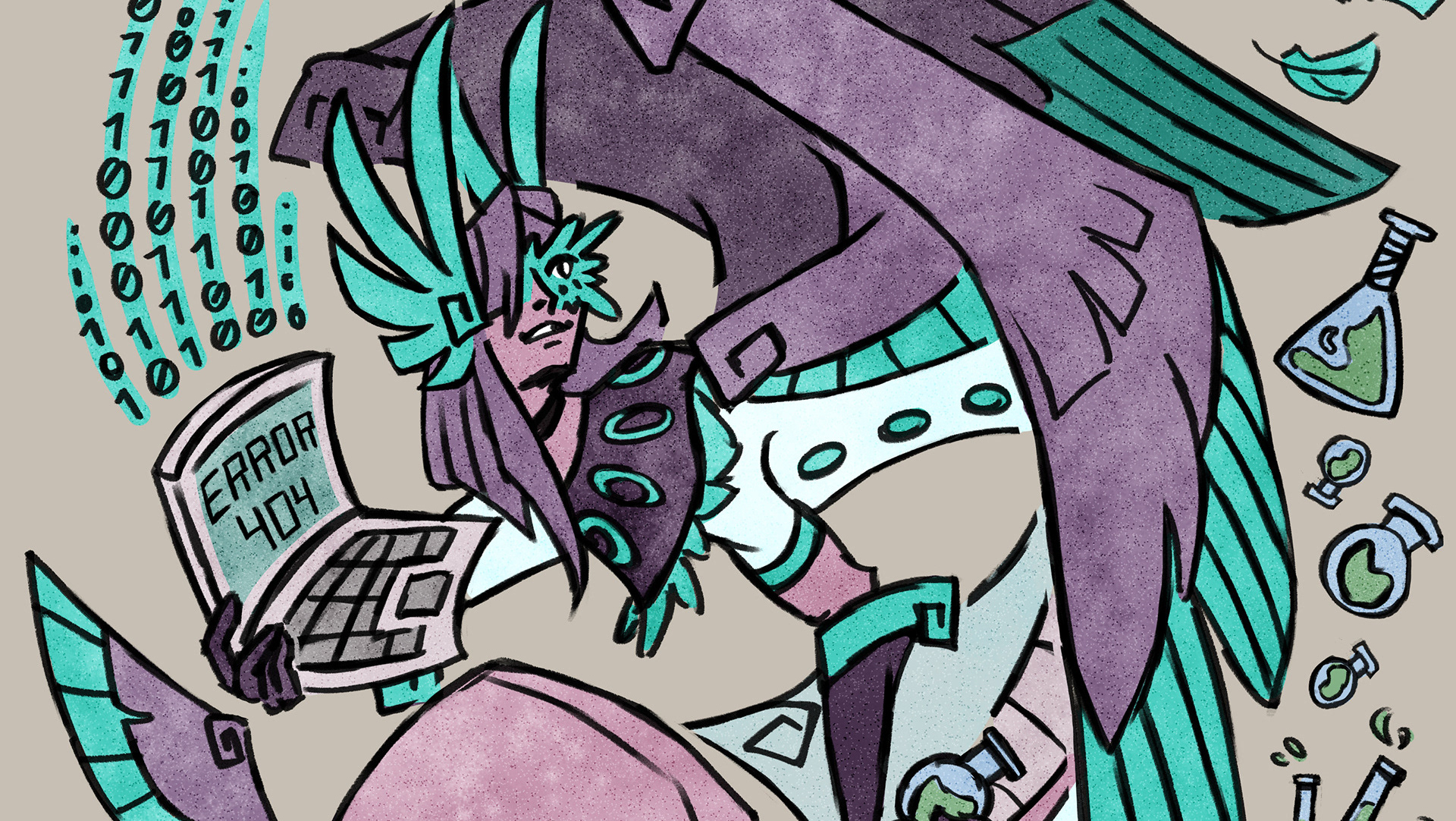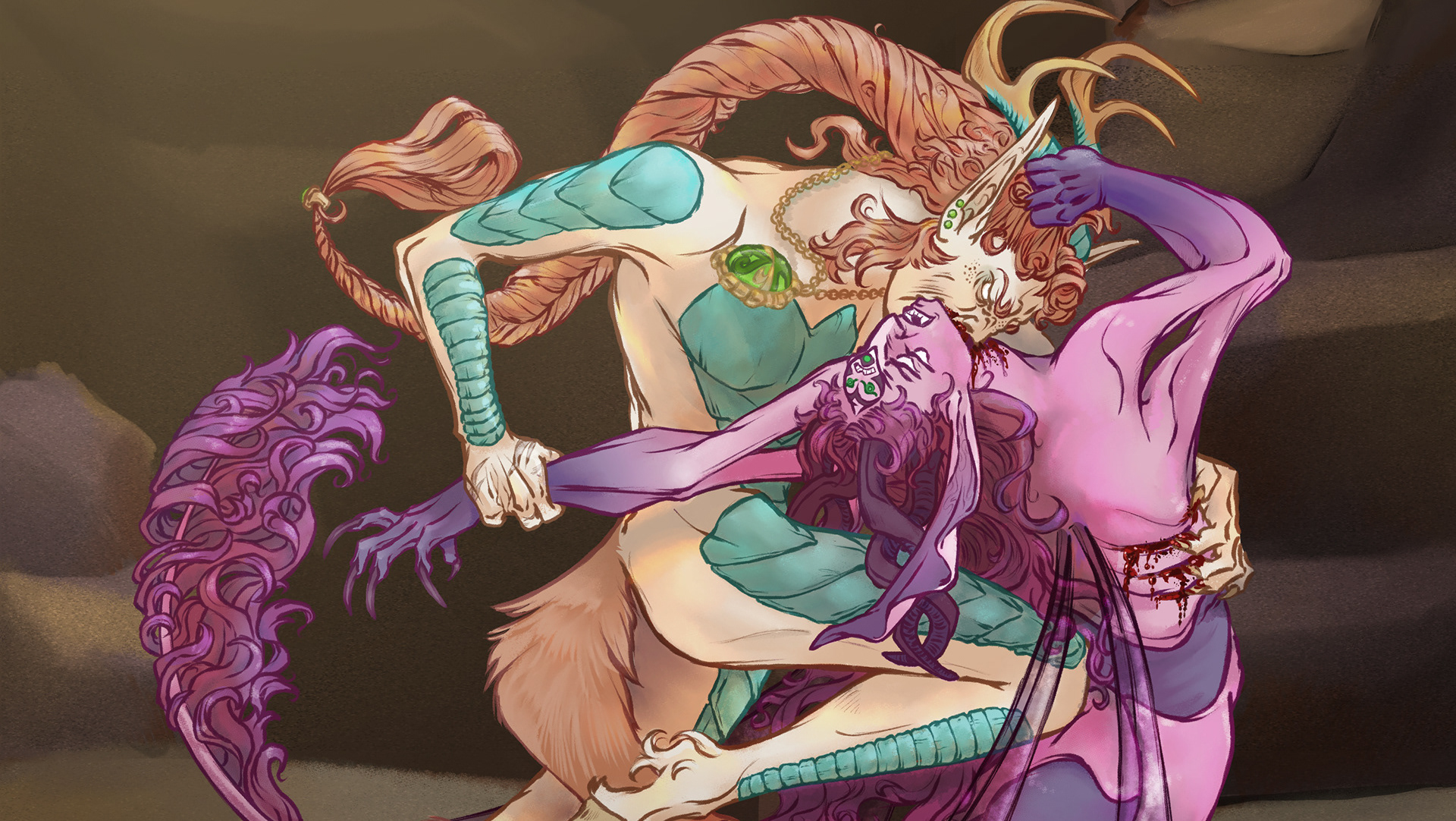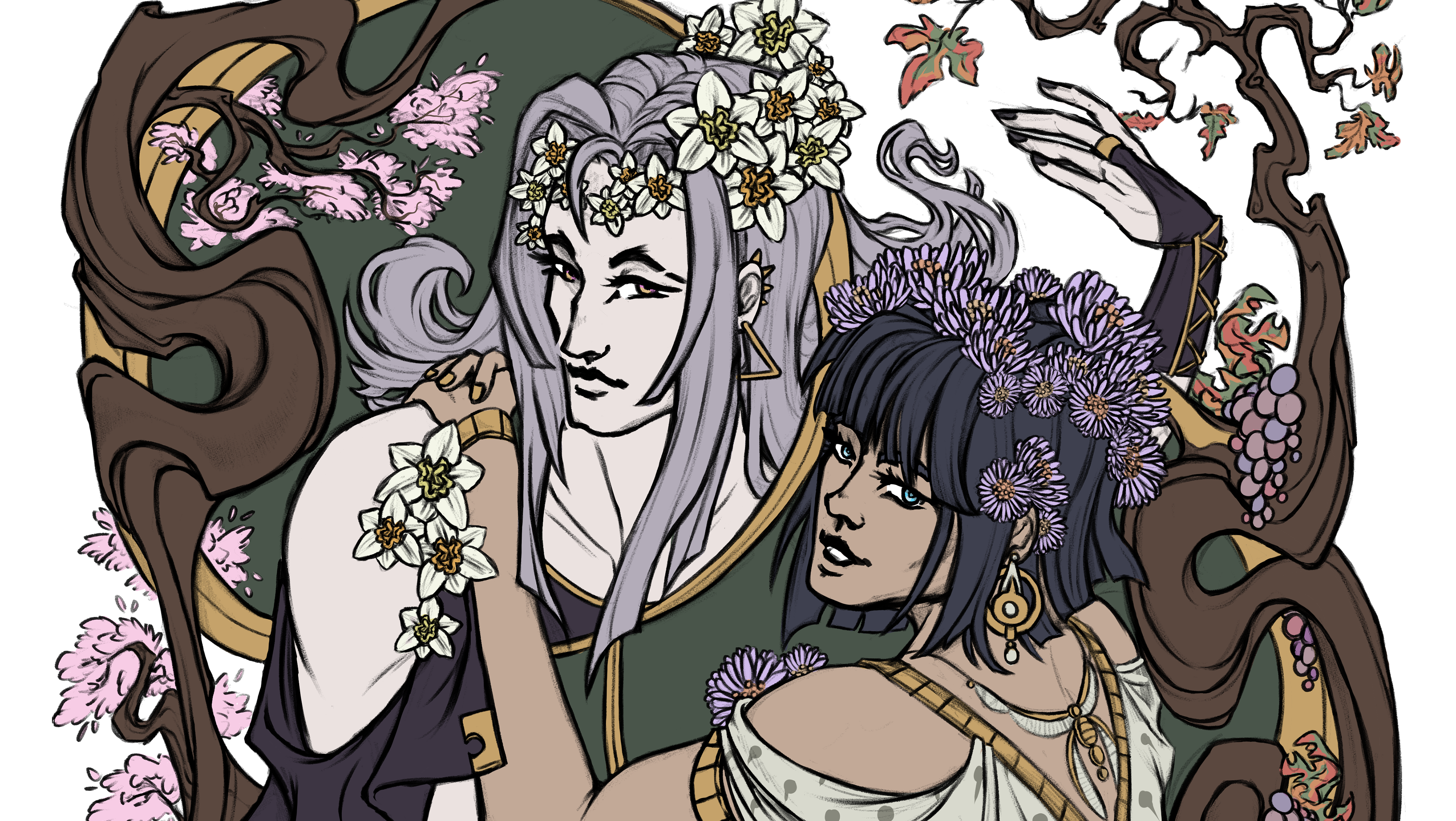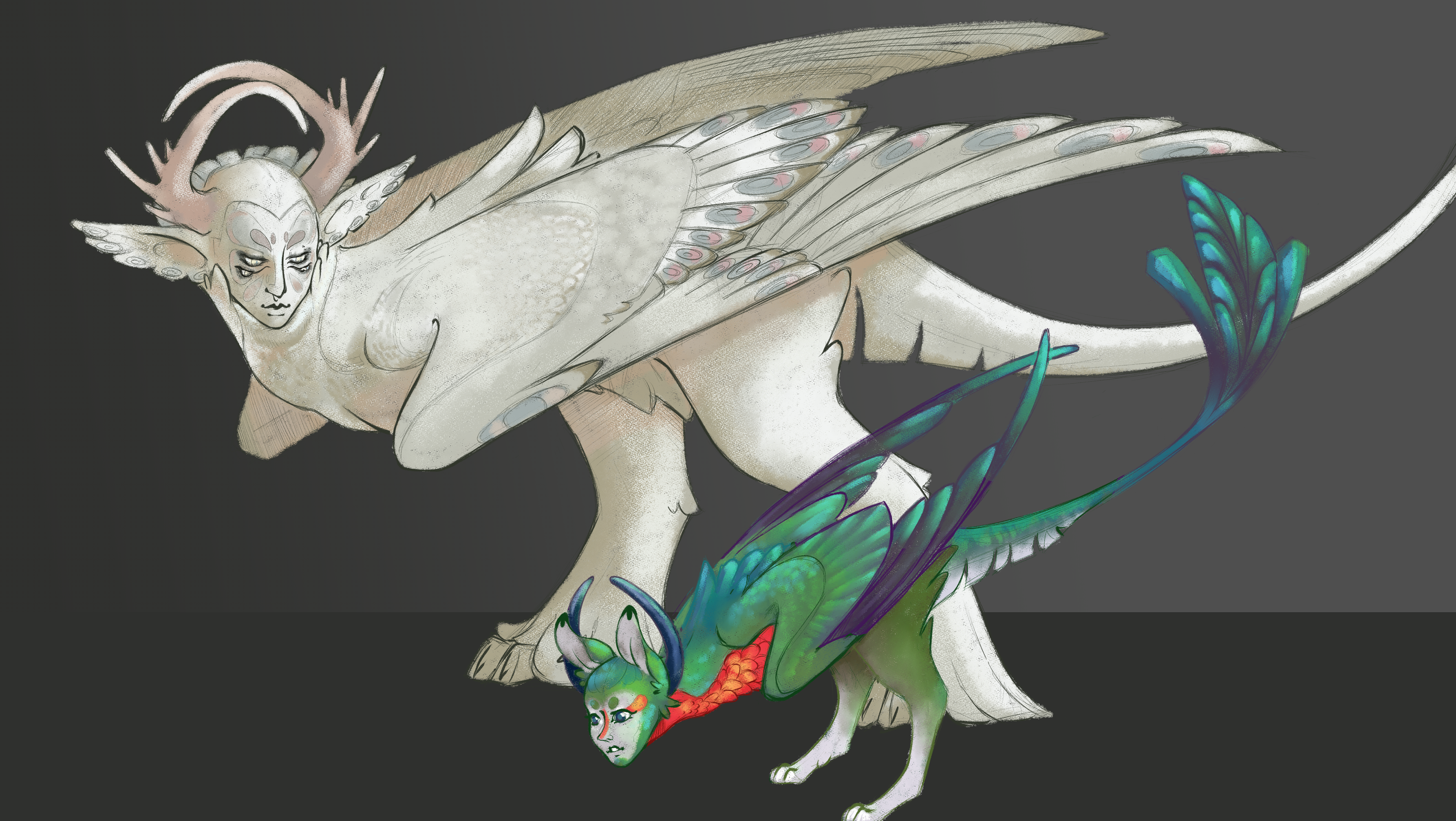
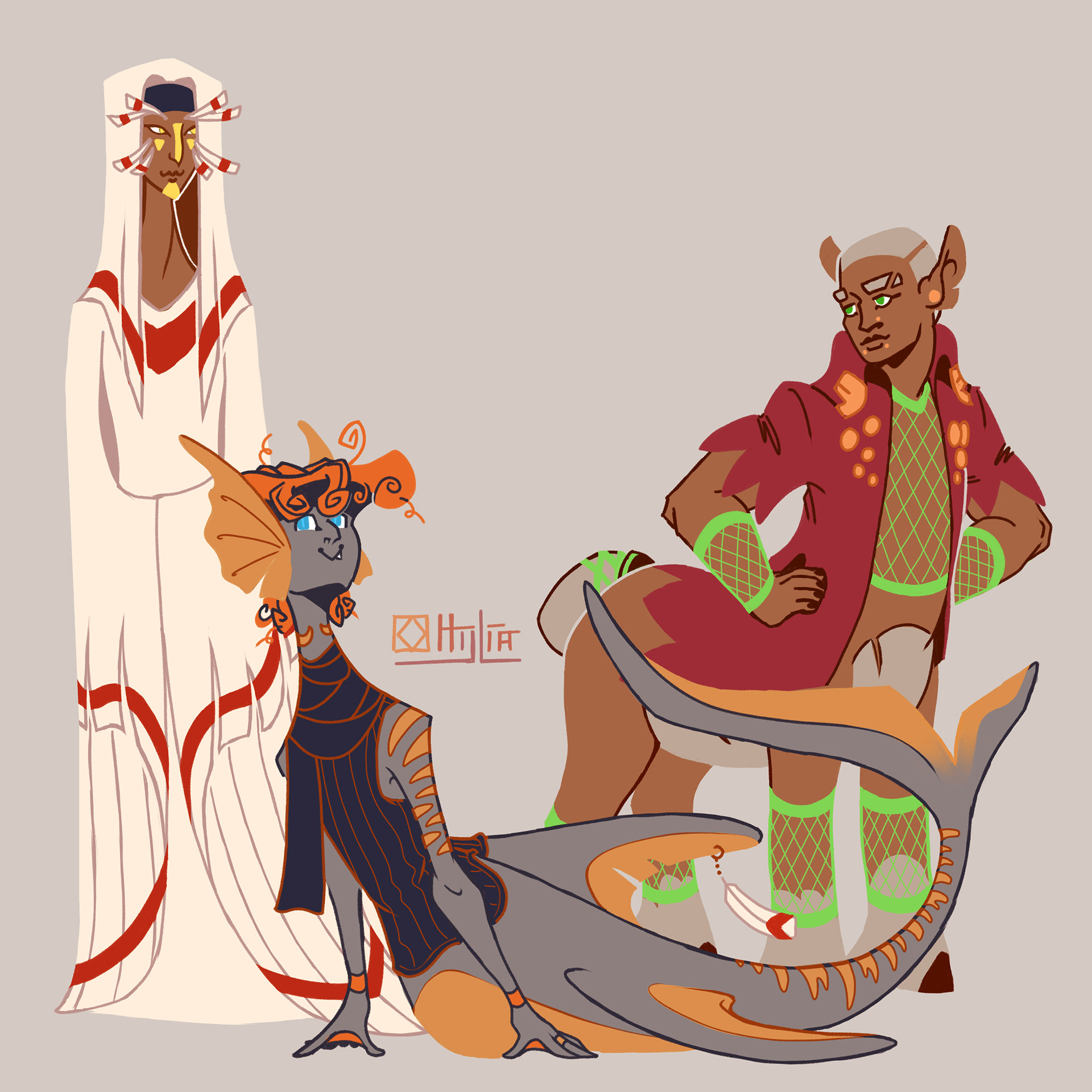
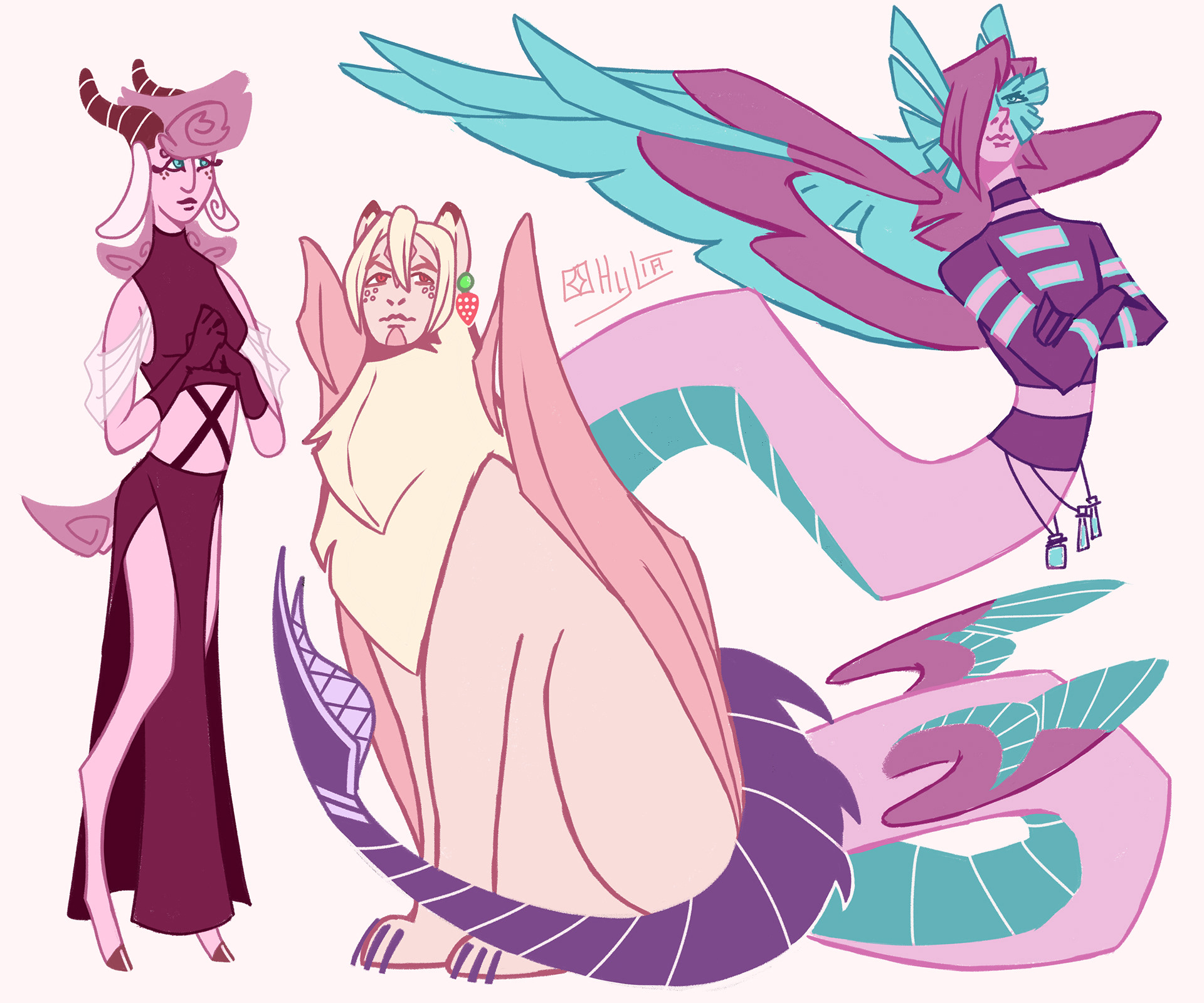
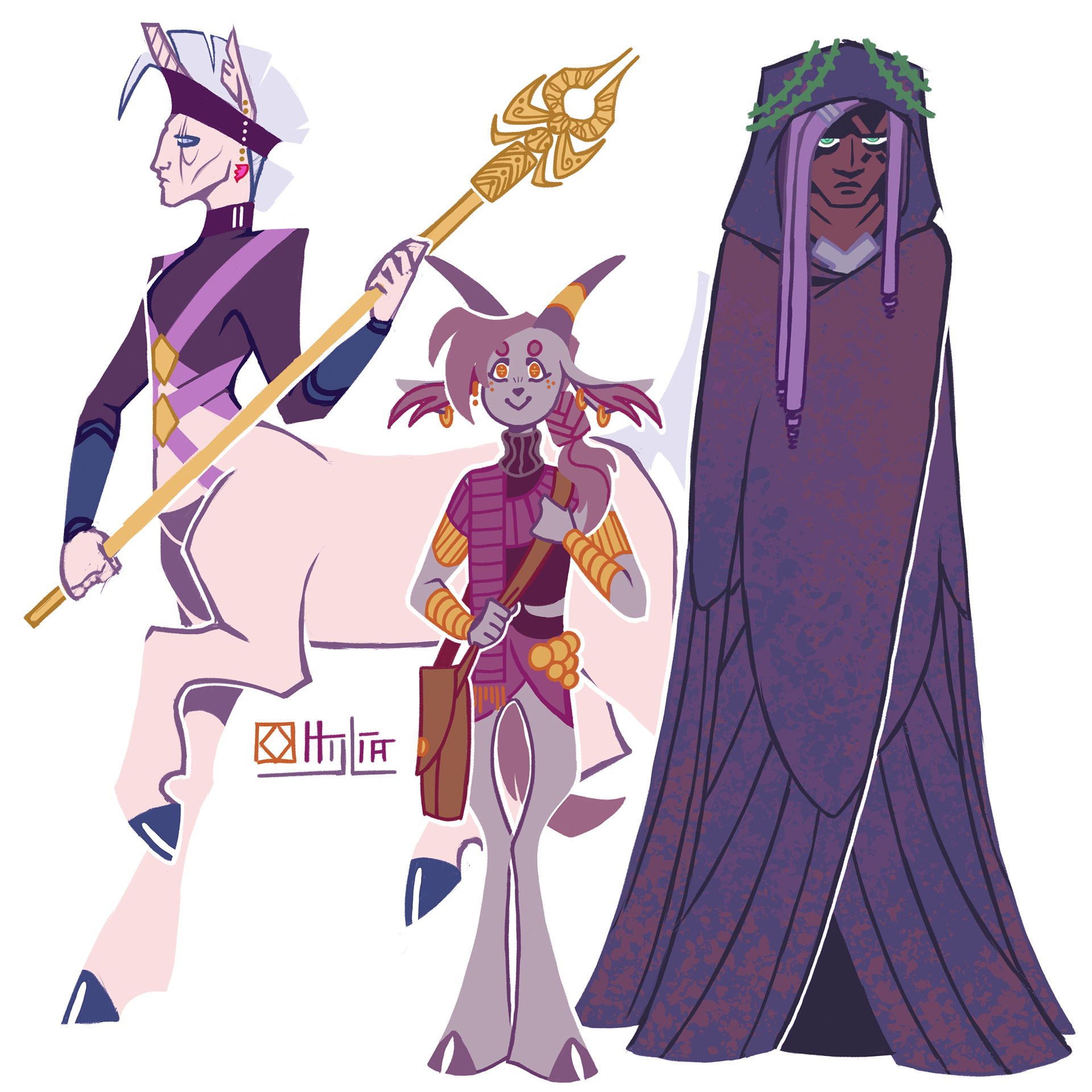
This shape language exercise seeks to develop my skills as a visual storyteller by creating characters whose personalities, purposes and themes are visible at a glance. The style is more rustic, with imperfect lines and textured flat color.
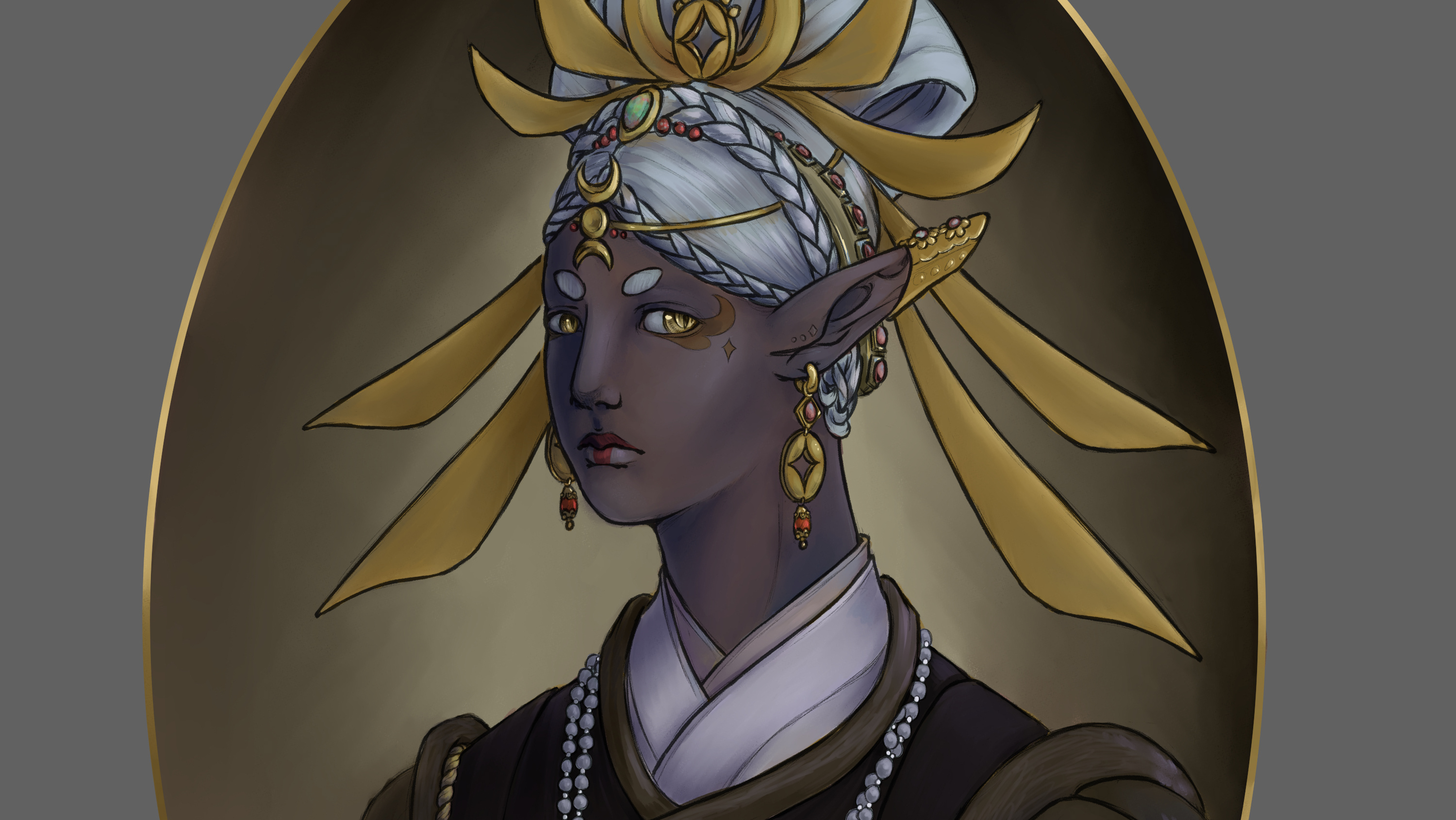
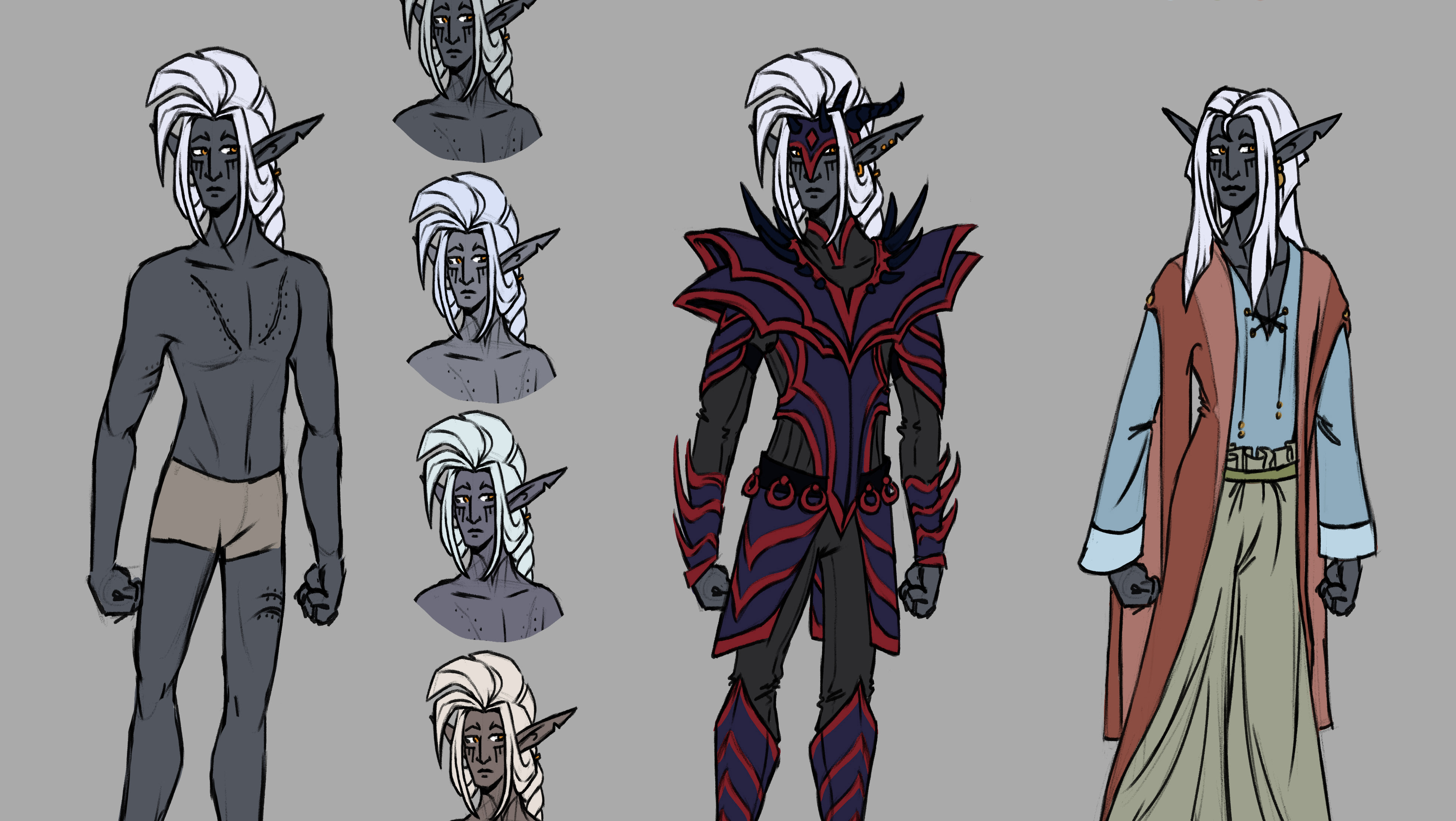
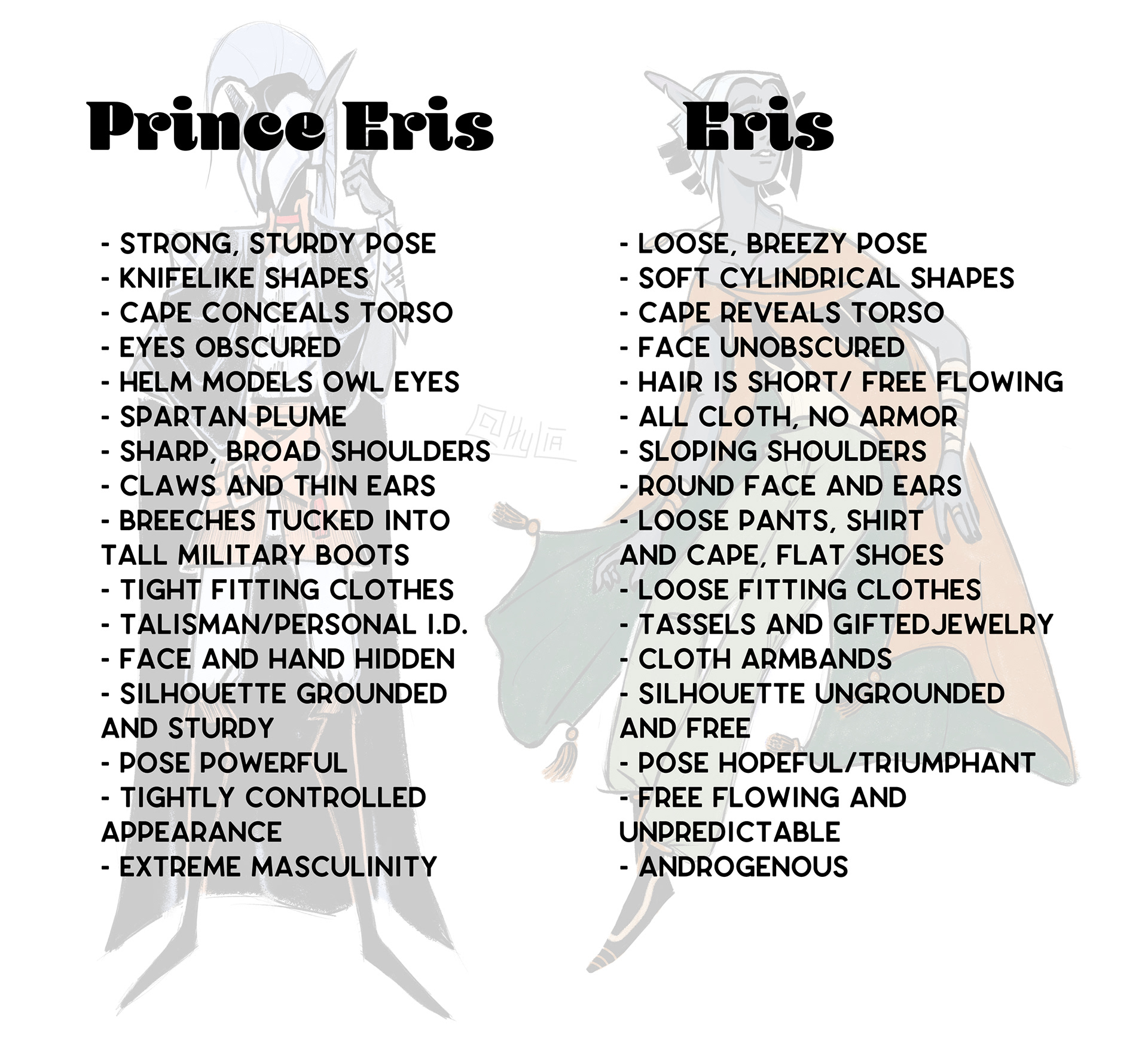
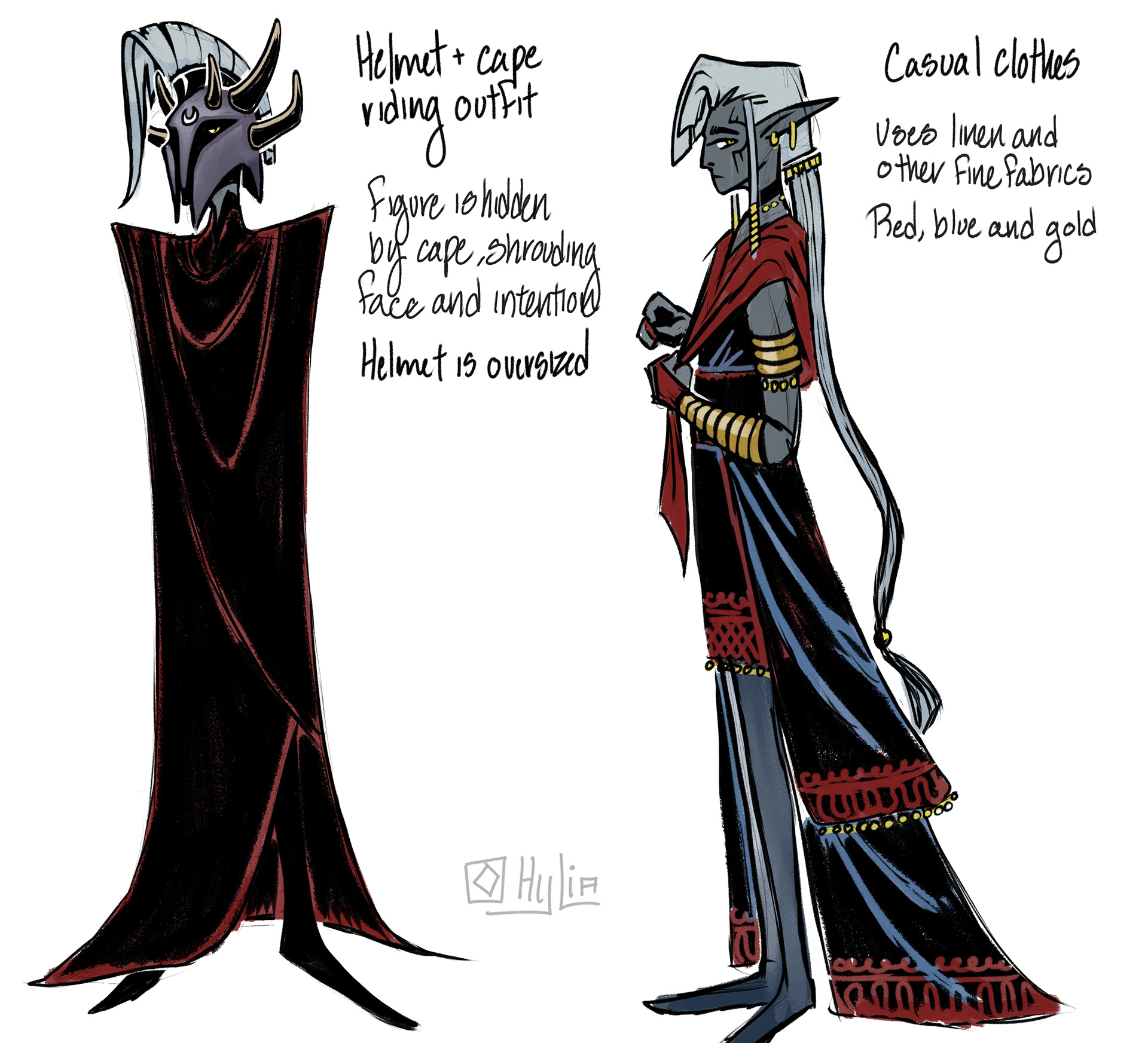
Below are illustrations of the same character, before and after character growth. The former is militant and rigid, with sharp corners like knives. The latter is soft, organic, and free flowing. The dichotomy represents the character's growth into a person free from harmful expectations and restrictions.
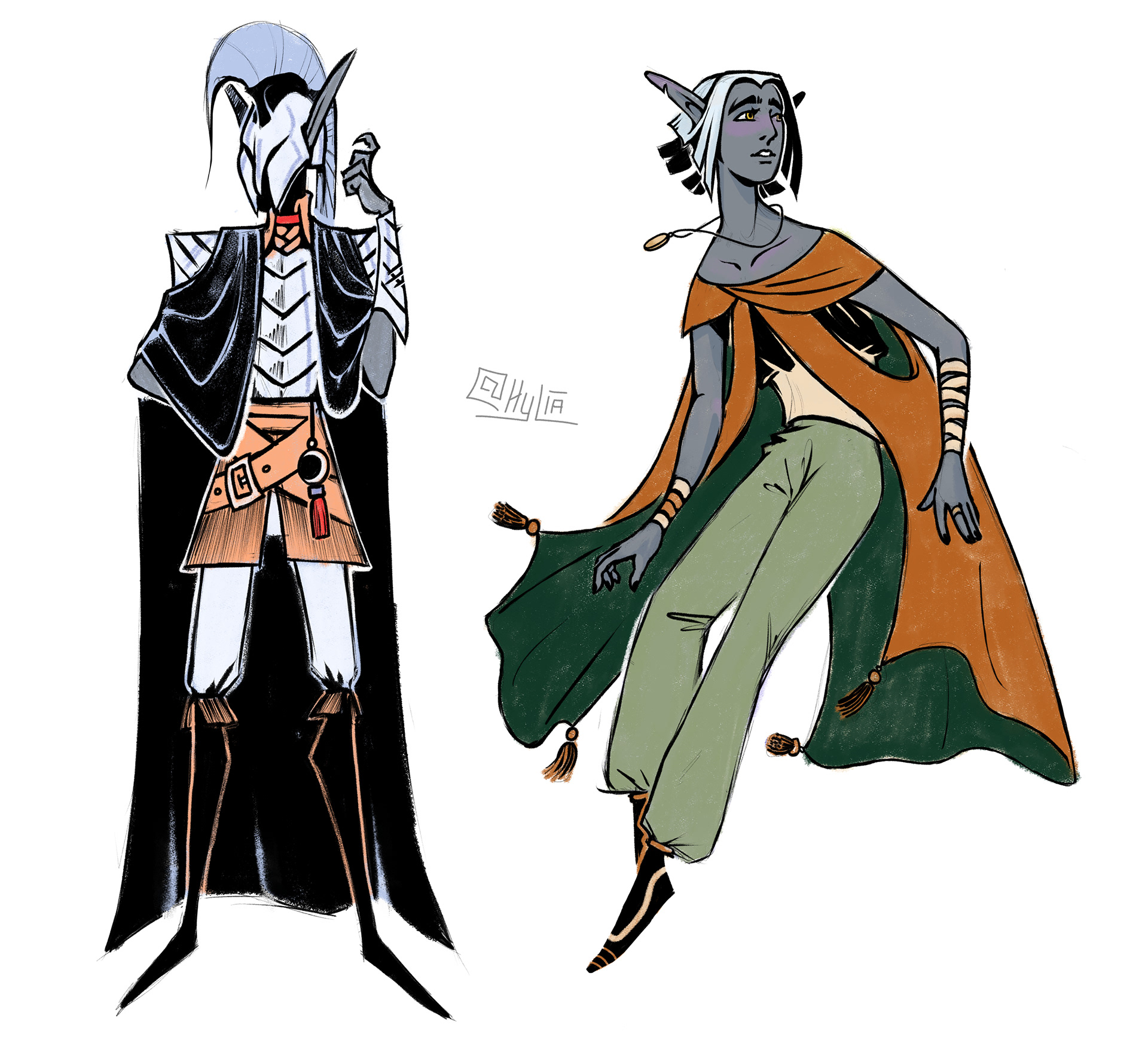
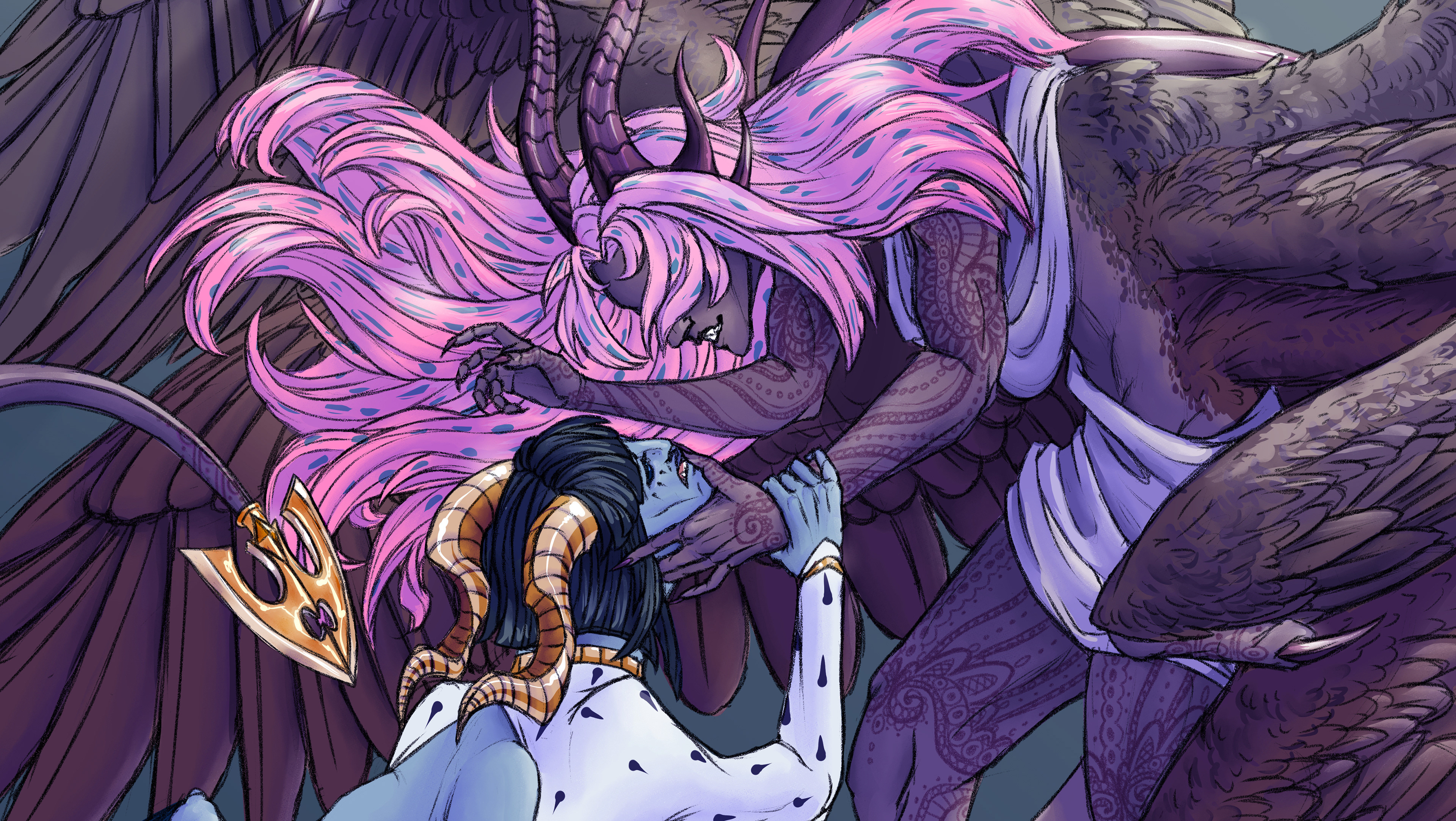
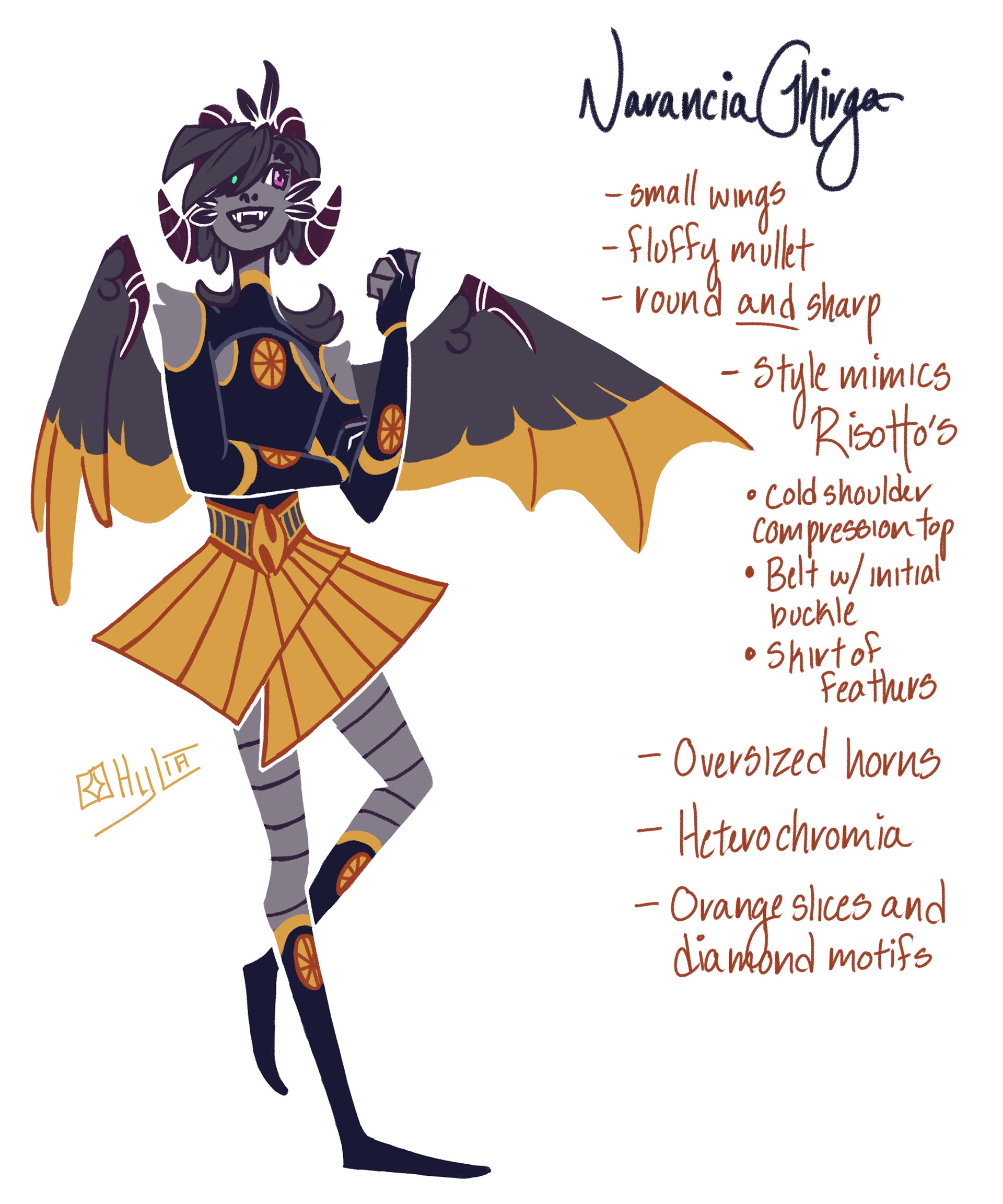
More character design, focused on treatment of feathered characters. How both characters use their wings and other feathers is indicative of personality and role in the story.
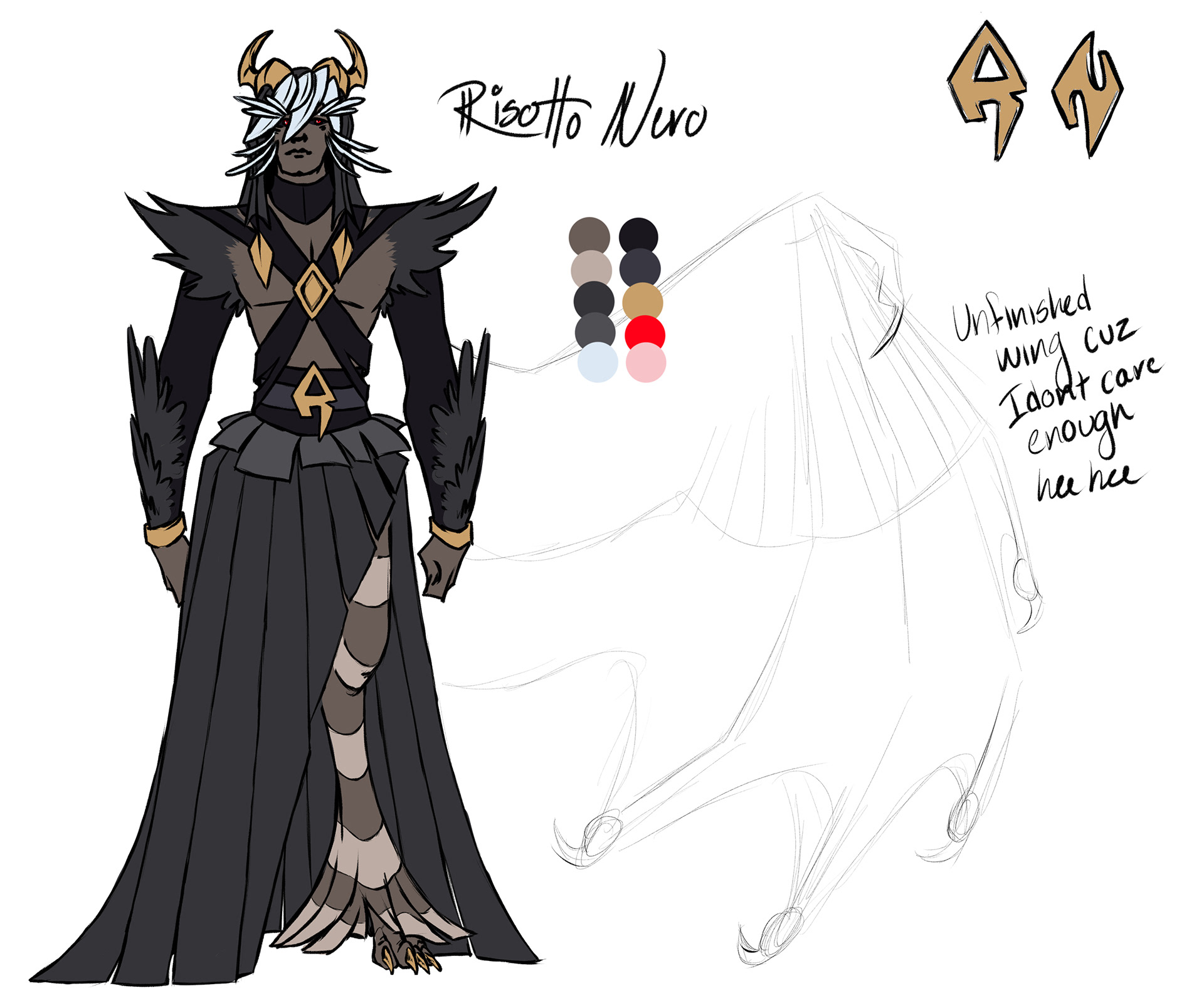
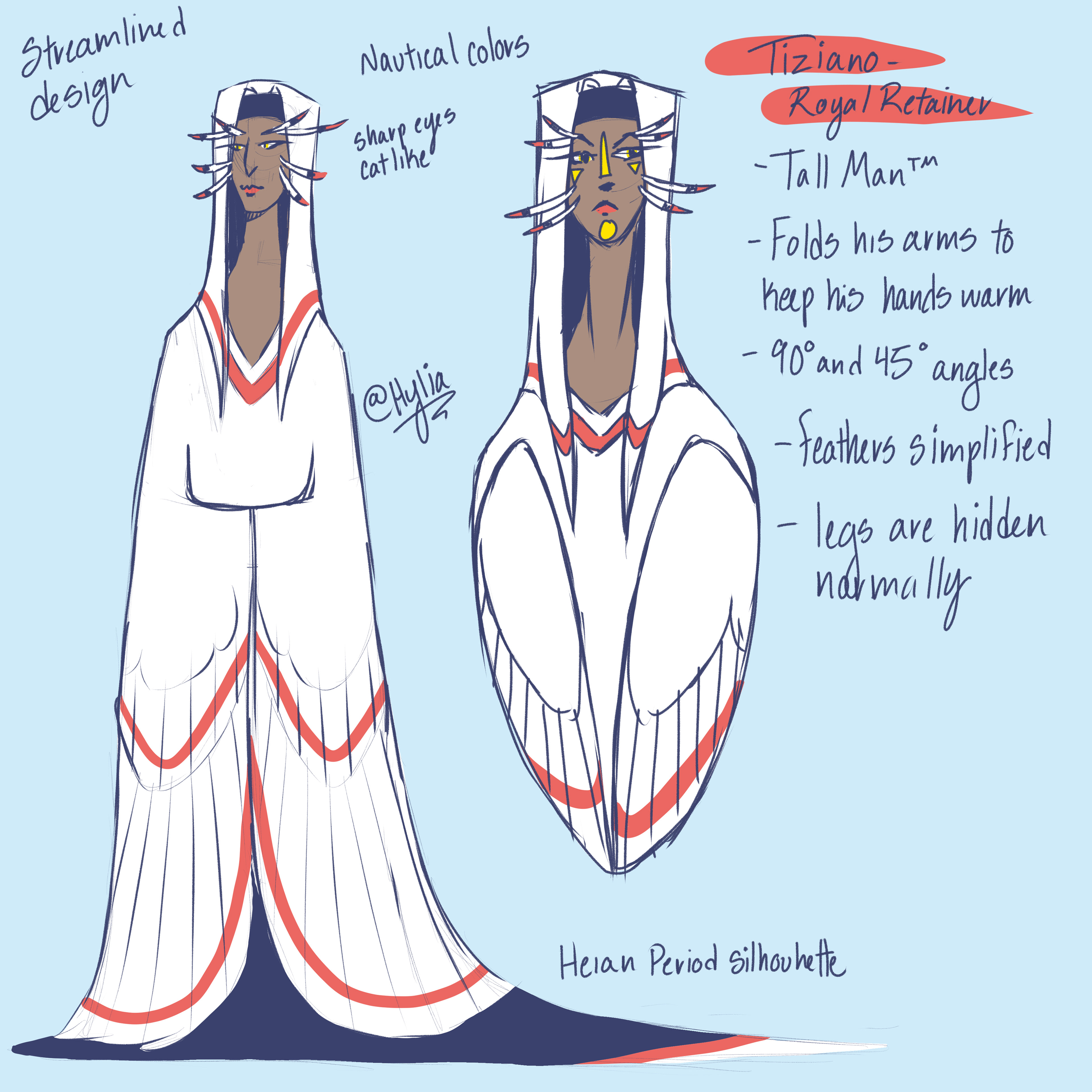
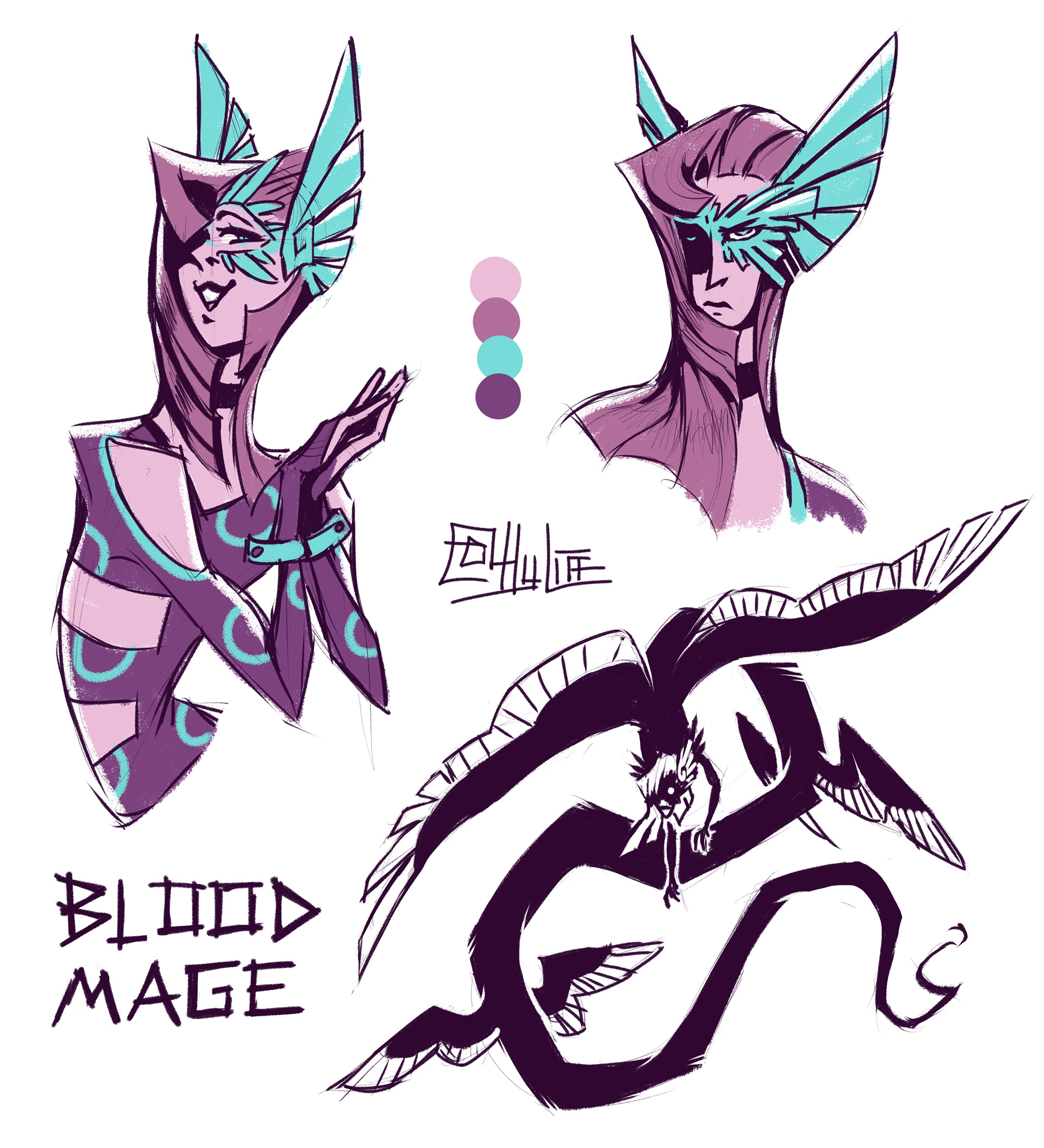
Characters who have feathers as part of their design provide an excellent opportunity to play with the anatomy of birds. Feathers can make pauldrons, arm braces, hair, sleeves, skirts, coattails, pants and whiskers. Birds are also extremely expressive with their plumage, which provides opportunities to create inhuman expressions that read just as easily.
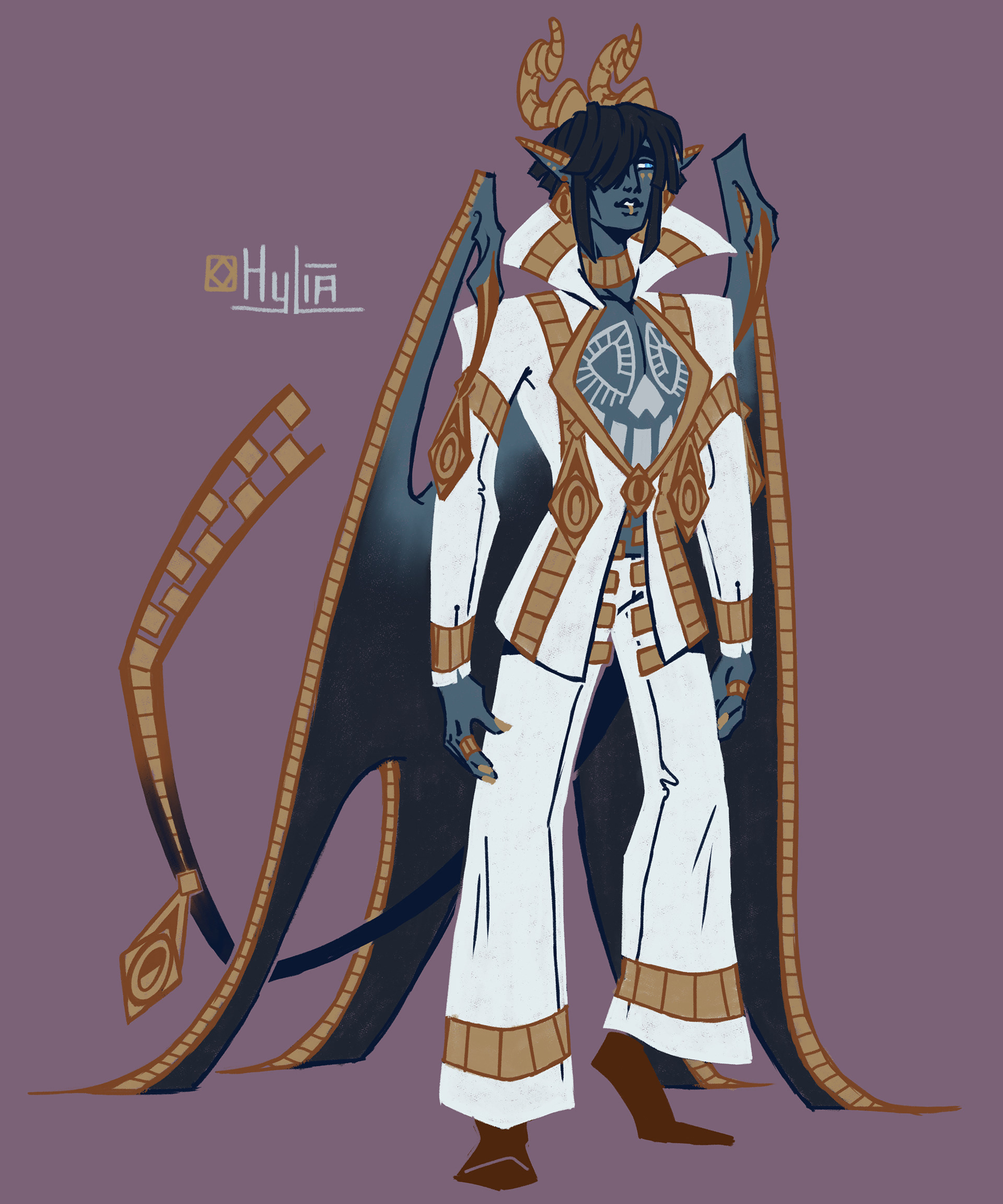
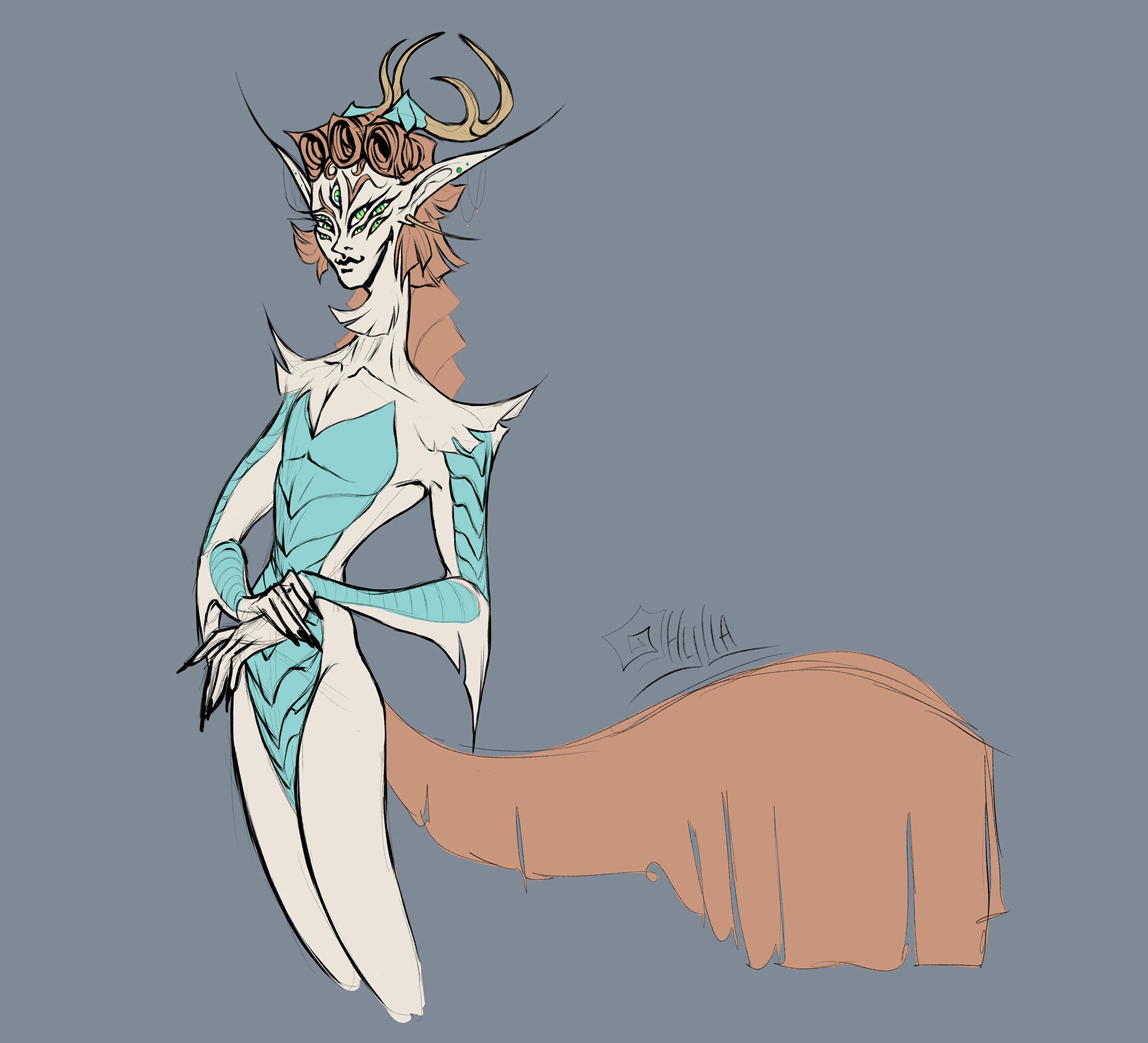
A dishonest character is marked by concealing as much of the figure as possible. Those who keep their hands hidden from sight often have something to hide, or are concealing a weapon, and are thus a danger.
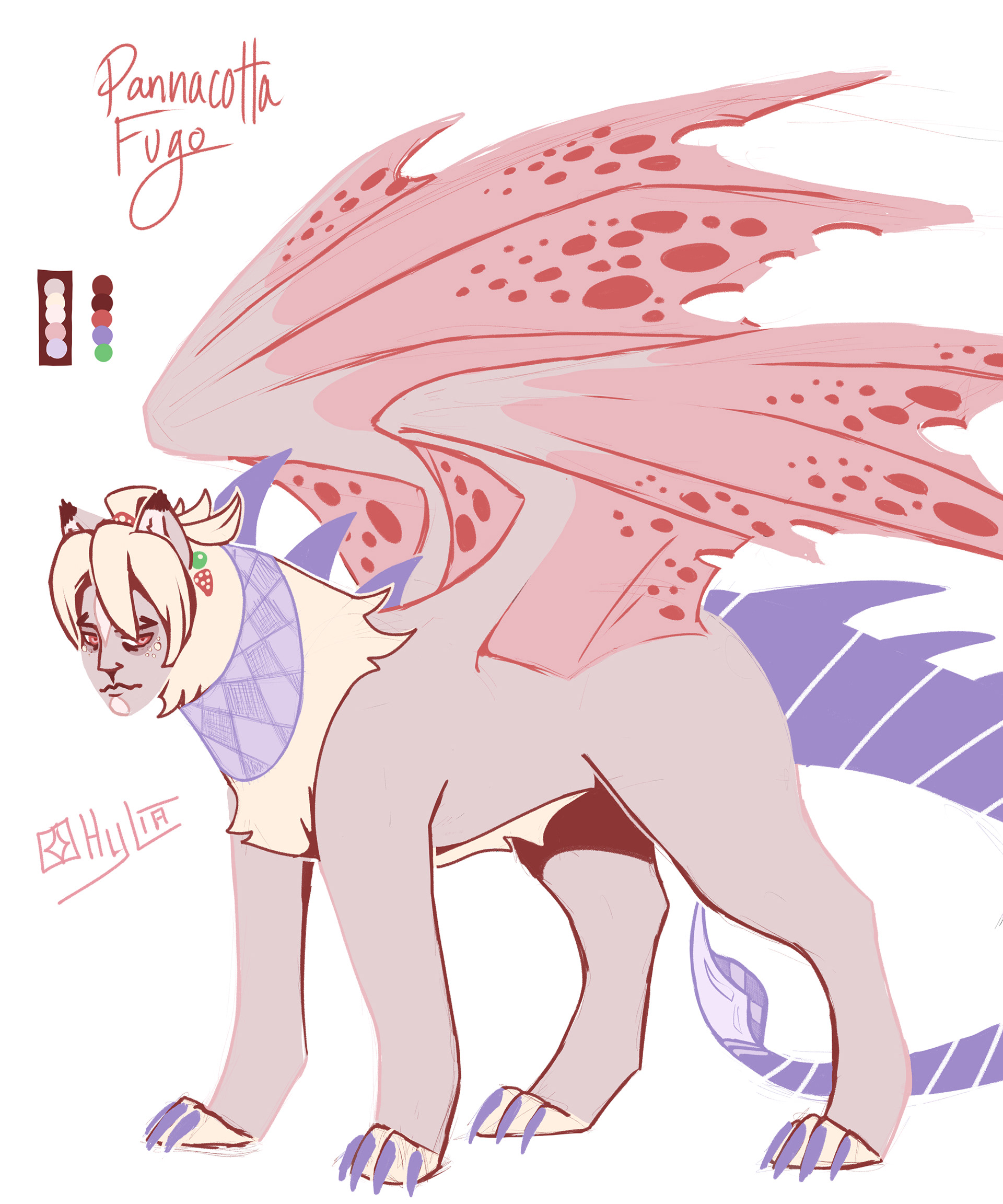
Brightly colored birds are often a delight to look at, but when combined with reptilian aspects, bring a whole other meaning to bright coloration. Animals that are brightly colored are often warning onlookers of venom or poison. Despite how beautiful a character may be, there is still the possibility that they are far more than they seem.
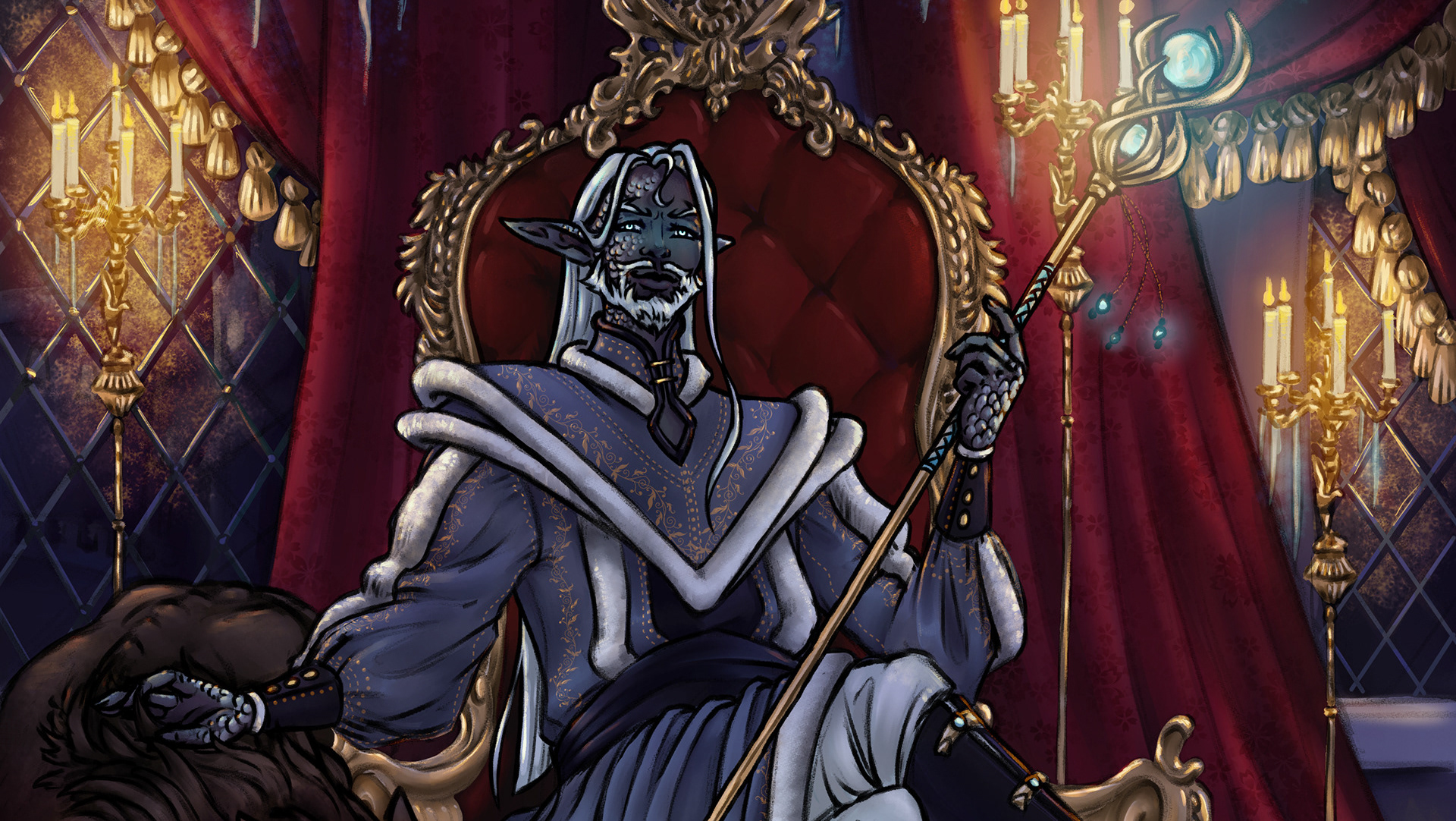
This character's design makes use of extreme angles and razor sharp features. He is posed to be polite and demure, but his features state otherwise. His scales, like those of a snake, and foxlike tail give him away as a trickster character.
I pushed his anatomy to the absolute limit here, with a thin waist, thin wrists, and most noticeably, a few eyes too many. He is an honest charlatan, a paradox. No part of his form is concealed or obscured; he clearly has nothing to hide. The sly grin says otherwise.
Explorations into characterization with just visual development.
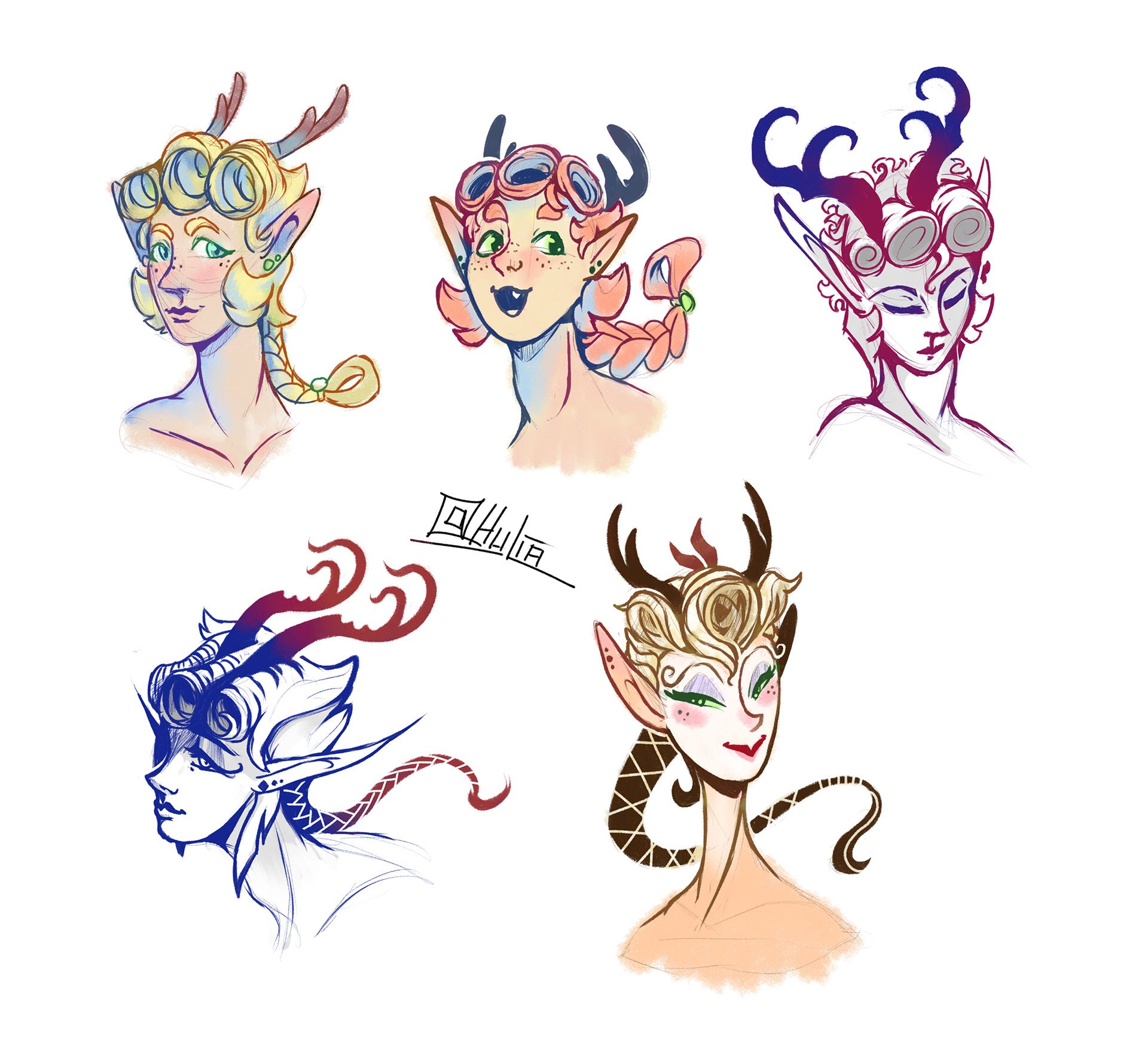
This exercise seeks to explore the spectrum of characterization that can be achieved by designing the same face to be a hero or a villain.
The top row uses round shapes and friendly colors to make the character appear harmless. The bottom row uses sharp, snake-like shapes to emphasize the danger of the same exact character.
The shapes of the horns, braid, ears and hair are altered according to how friendly or villainous the design is intended to be.
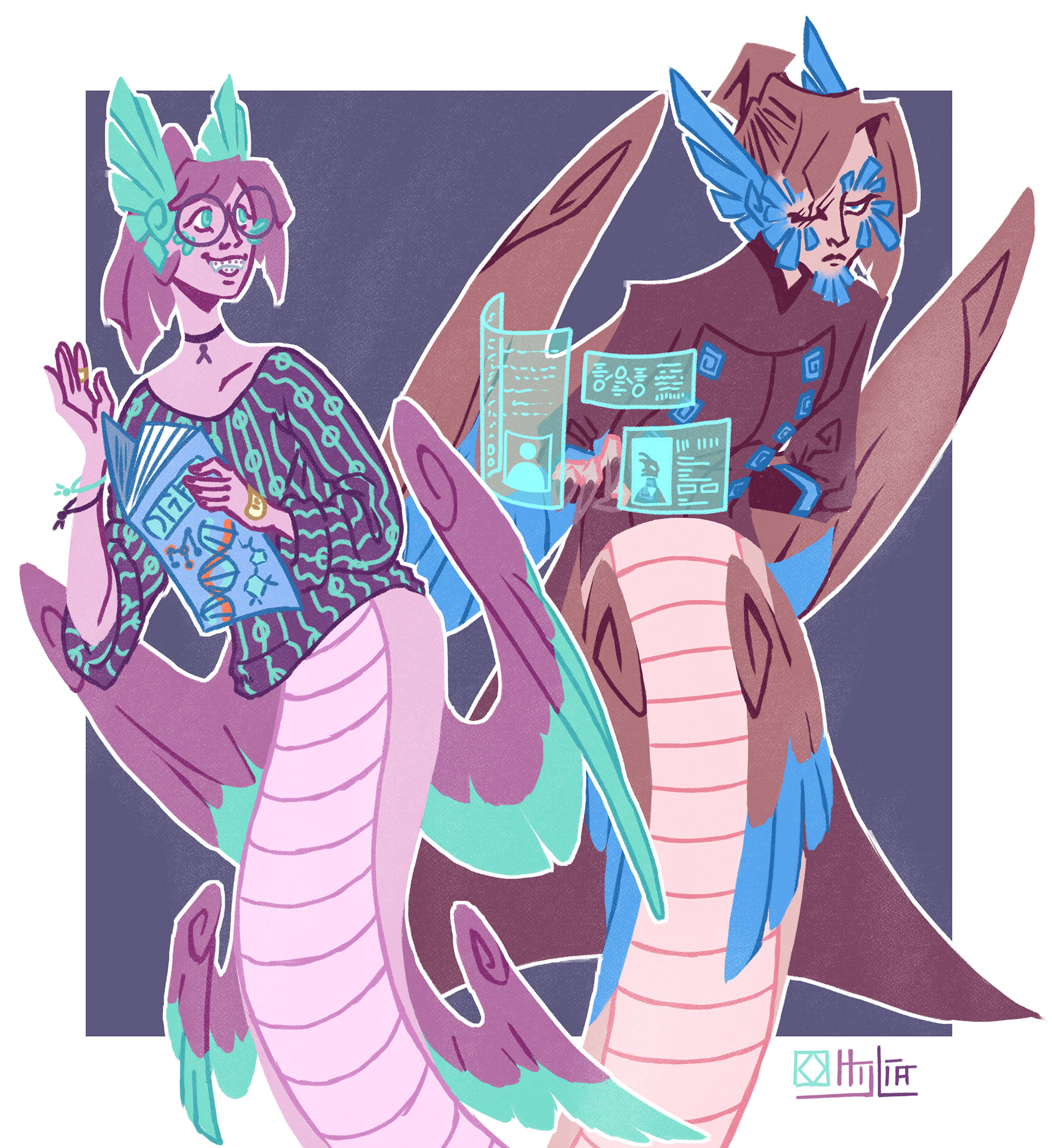
Another familiar face to this exercise, here is the Quetzalcoatl scientist.
For the design in front, bright colors and round shapes are used to enhance the friendliness of the character. Dressed like a nerdy, middle-school girl stereotype, the design is vibrant, non-threatening and friendly.
The second design is the same character after a corruption arc. Sharp lines and shapes, dull colors, and unfriendly, closed posture make this character appear menacing and dangerous. No personal accessories, hair tied in a tight bun and feathered facial hair make this a clearly adult character. Mature, calculating, and dangerous.